

How Computer Shuffle Puzzle Games Enhance Children’s Thinking Skills
1. Introduction
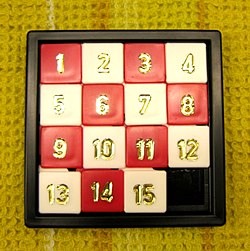
In a world where technology is part of everyday life, children are spending more and more time using computers, tablets, and smartphones. Parents often worry that too much screen time can harm a child’s development. However, not all computer games are bad. Some games can actually help the brain grow and think better. One great example is computer shuffle puzzle games — digital puzzles where children rearrange pieces of a mixed-up image to make it whole again.
Unlike ordinary video games that rely on speed or luck, shuffle puzzles require thinking, focus, and patience. As children move the pieces around, they are not only having fun but also exercising their brain. These games can improve attention, memory, reasoning, and emotional control, making them a valuable digital learning tool.

2. Developing Problem-Solving and Logical Thinking
Shuffle puzzle games are excellent for building problem-solving skills. Each puzzle begins with a picture broken into small square pieces arranged randomly. The player’s job is to find the correct order of these pieces. To do that, children must plan each move carefully and think several steps ahead — just like in chess or math problems.
This kind of play activates the frontal lobe of the brain, which is responsible for reasoning, logic, and decision-making. Every time a child tries a new combination, they are practicing hypothesis testing — asking themselves, “What will happen if I move this piece here?” This trial-and-error process strengthens their ability to analyze problems and find creative solutions in both games and real-life situations.
3. Improving Memory and Attention to Detail
Shuffle puzzles also train children’s visual and working memory. To complete the puzzle, they must remember where each piece was, what it looks like, and where it might fit. This strengthens short-term memory and helps them retain visual information more effectively.
Additionally, shuffle puzzles require a high level of attention to detail. Children must notice small differences in color, shape, or pattern to figure out the correct position of each piece. This sharpens their observational skills, which are essential for learning subjects like reading, writing, and science.
Unlike fast-moving games that encourage quick reactions, shuffle puzzles promote deep focus. Children must slow down, think carefully, and stay mentally engaged for longer periods — an important skill for academic success.
4. Encouraging Patience, Perseverance, and Emotional Control
Playing shuffle puzzle games can also teach valuable emotional and behavioral skills. Since these puzzles can be challenging, children learn to be patient and keep trying even when the solution isn’t obvious. Completing a puzzle after many attempts gives them a sense of achievement and self-confidence.
This process helps children understand that mistakes are part of learning. They discover that solving a problem often requires persistence, calm thinking, and a positive attitude. These lessons extend far beyond the screen — they build emotional strength and resilience that benefit children in school, sports, and social life.
5. Boosting Spatial Intelligence and Mathematical Thinking
Shuffle puzzles are also an excellent way to develop spatial intelligence — the ability to understand and manipulate shapes and positions in space. When a child moves pieces around, rotates them mentally, and predicts how they will fit together, they are training their spatial reasoning skills.
These skills are closely linked to mathematical ability and STEM learning. Children who often play with spatial puzzles tend to perform better in geometry, physics, and computer programming later in life. Shuffle puzzles, therefore, are not just fun games but also mental exercises that prepare children for future academic challenges.
6. Learning Through Play and Digital Literacy
One of the best aspects of computer shuffle puzzle games is that they combine learning with play. Many of these games feature educational themes — animals, maps, famous landmarks, or historical figures. As children rearrange the images, they naturally absorb new information about the world around them.
At the same time, they are improving their digital literacy. By using a computer or tablet to solve puzzles, children learn to interact with technology in a focused and responsible way. They develop hand-eye coordination and understand how to use digital tools purposefully — a crucial skill in today’s technology-driven society.
7. Conclusion
In conclusion, computer shuffle puzzle games are much more than simple entertainment. They challenge the brain, nurture patience, and encourage curiosity. Through these games, children learn to think logically, remember details, and control their emotions — all while having fun.
When used in moderation and supported by parents or teachers, shuffle puzzles can turn screen time into a powerful brain-training experience. In a world full of distractions, such thoughtful digital games remind us that technology, when used wisely, can be a wonderful ally in helping children grow into smart, focused, and confident learners.
Top Shuffle / Sliding Puzzle Mobile Games (2024–2025)
1. Slide Master: Tile Shuffle (Popcore Games)
- Fresh take on the classic sliding puzzle.
- Features smooth animations, daily challenges, and leaderboard competitions.
- Android: Slide Master on Google Play
- iOS: Slide Master on App Store
2. Tile Swap Puzzle: Art Shuffle
- Rearrange mixed-up art pieces or photos to complete the picture.
- Includes famous paintings, animals, and landscapes.
- Android: Tile Swap Puzzle on Google Play
- iOS: Tile Swap Puzzle on App Store
3. Unblock Cube 3D (Easybrain)
- 3D version of the classic Unblock puzzle — rotate and slide cubes in multiple directions.
- Addictive and visually modern.
- iOS: Unblock Cube 3D on App Store
- Android: Unblock Cube 3D on Google Play
4. Slidey®: Block Puzzle Reloaded (2025 Update)
- Combines block sliding with match logic; updated with new levels and events in 2025.
- Bright visuals and simple one-finger gameplay.
- Android: Slidey: Block Puzzle on Google Play
- iOS: Slidey on App Store
5. Shuffled Picture Challenge (Infinity Games)
- Minimalistic and relaxing shuffle puzzle where you fix broken patterns and images.
- Beautiful sound design and clean art style.
- Android: Shuffled Picture Challenge on Google Play
- iOS: Shuffled Picture Challenge on App Store
6. Block Jam 2025: Move & Merge
- Hybrid of shuffle and merge puzzles; move blocks to combine matching ones.
- Daily missions and offline play supported.
- Android: Block Jam 2025 on Google Play
- iOS: Coming soon – announced for late 2025
7. Puzzle Slide Adventure (SayGames)
- Mixes sliding puzzles with a storyline — unlock chapters by solving shuffle puzzles.
- Great visuals and casual difficulty.
- Android: Puzzle Slide Adventure on Google Play
- iOS: Puzzle Slide Adventure on App Store
8. Gallery Shuffle: Picture Restoration
- Rebuild scrambled artwork in a virtual gallery.
- Calm gameplay with relaxing music and smooth controls.
- Android: Gallery Shuffle on Google Play
- iOS: Gallery Shuffle on App Store
9. Link Slide Puzzle (BitMango)
- New 2025 version featuring dynamic movement; connect paths by sliding tiles in the right order.
- Addictive and logic-driven.
- Android: Link Slide Puzzle on Google Play
- iOS: Link Slide Puzzle on App Store
10. Smart Shuffle: Brain Training Puzzle
- Focuses on cognitive training — numbers, patterns, and logic shuffling.
- Adaptive difficulty that adjusts to your skill.
- Android: Smart Shuffle on Google Play
- iOS: Smart Shuffle on App Store